


Last Updated: November 7, 2026
Quick Summary
The best alternatives to expensive designer handbags are well-made bags from non-luxury brands, quiet luxury labels without visible logos, and pre-loved designer handbags. Judge quality by materials, hardware, and stitching, then compare cost per wear rather than sticker price.
- Use a five-point inspection covering strap attachment, seam tension, hardware, base structure, and lining.
- A $70 tote carried 200 times costs 35 cents per wear, versus $38 per wear for a $1,900 bag carried 50 times.
- Editorial roundups now feature non-luxury handbag options mostly under $250.
- Inspired designs are legal to buy, but counterfeits that copy logos and trademarks are not.
- Pre-loved designer handbags offer authentic craftsmanship at a fraction of the original price.
Table of Contents
- Why Shoppers Are Trading Designer Handbags for Smarter Alternatives
- How to Judge Quality in an Affordable Handbag
- Alternative Purse Brands and Styles That Deliver Value
- Quiet Luxury Handbag Brands Without the Logo Premium
- Pre-Loved Designer Handbags: The Middle Path to Real Craftsmanship
- Inspired Designs vs. Counterfeits: What Is Legal to Buy
- Budget Breakdown: What $20, $70, and $190 Actually Buy You
- Shop Gilded Carry's Curated Alternatives
- Frequently Asked Questions
Why Shoppers Are Trading Designer Handbags for Smarter Alternatives
The global handbag market is projected to reach $68.86 billion in 2026, according to Fortune Business Insights' handbag market forecast, yet the luxury segment alone is forecast to grow from $28.9 billion to $52.8 billion by 2036. That gap tells the real story: plenty of shoppers still want the look and feel of a designer bag, but a growing share are unwilling to pay the designer price tag.
People want quality craftsmanship, honest materials, and a bag that fits their life, not just a logo that fits their budget.
Below, we break down how to spot real quality, which alternative purse brands deliver value, and where a pre-loved piece fits in.
How to Judge Quality in an Affordable Handbag
Quality in an affordable handbag comes down to three things: materials, hardware, and stitching. Get those right and a $70 bag can outlast a $700 one. Inspect the bag the way a reseller would.
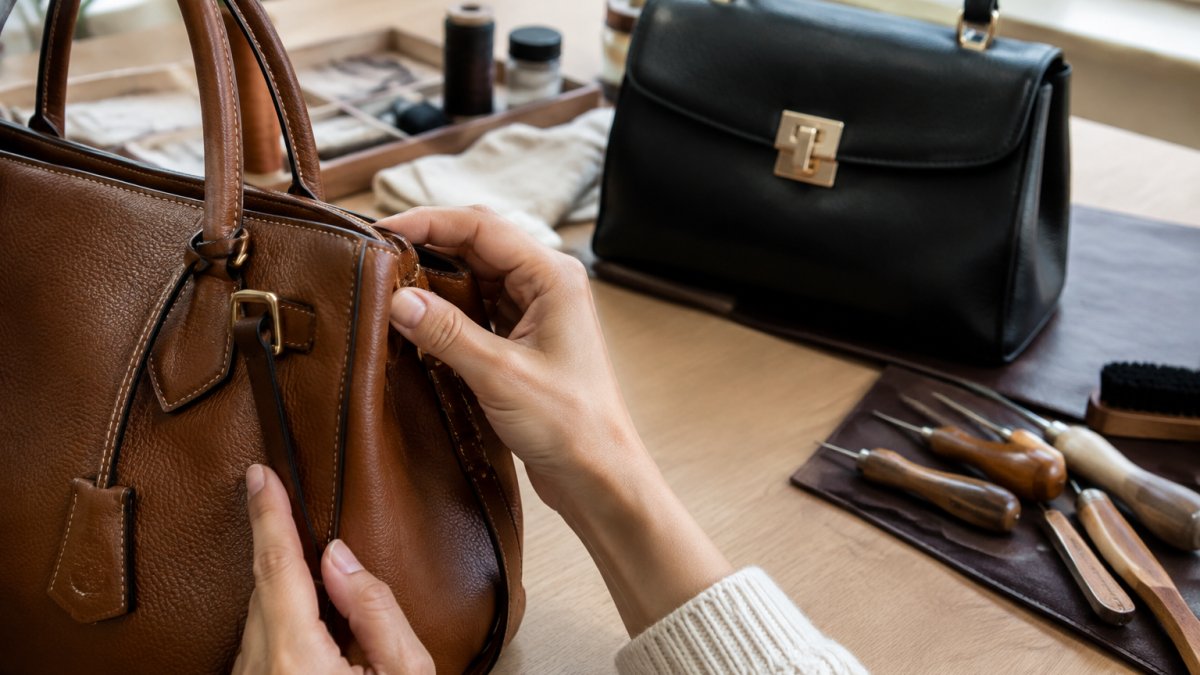
A Repeatable Five-Point Inspection Method
Use the same sequence every time so you compare bags on equal terms. It takes about three minutes per bag.
- Strap and handle attachment. Grasp the strap and pull gently away from the body. Stitching should not gap, and the attachment point should feel reinforced rather than tacked on. On totes, check that handles are stitched through a reinforced patch, not glued or single-stitched.
- Seam tension. Run a thumb along interior and exterior seams. Stitches should be tight, even, and slightly recessed into the material. Loose or wavy seams are the first thing to fail under load.
- Hardware function. Open and close every zipper and clasp ten times. Metal zippers should glide without catching, and clasps should snap with a solid click rather than a hollow rattle. Gold-tone plating should be even at the edges, where bubbling and flaking start.
- Base and structure. Set the bag down empty and then loaded. A structured base should stay flat; a slouchy bag should still hold its footprint. Press the bottom panel: if it flexes sharply with no reinforcement, the corners will wear through first.
- Lining and interior seams. Turn the bag inside out. Lining should be sewn to the shell at stress points, not floating loose, and interior seams should be finished rather than raw and fraying.
A common mistake is judging a bag only by how it looks in photos. The feel of the hardware and the tension in the stitching tell you far more.
Materials: What Each Option Actually Does Over Time
- Full-grain and top-grain leather soften and develop patina; they can be conditioned and spot-repaired. Expect the surface to darken slightly with use.
- Coated canvas and nylon resist water and stains and are easy to wipe clean, but coatings can crack at fold points over years of use.
- Faux leather (polyurethane) is the most variable. Good coatings stay flexible; cheap ones peel at edges and strap folds within a season. Check the cut edges for a thin, even coating rather than a plastic film that lifts.
Durability and Cost per Wear: The Math That Matters
Sticker price tells you what you pay once. Cost per wear tells you what the bag costs every time you carry it: divide the price by the number of times you realistically expect to use it.
- A $70 tote carried 200 times costs 35 cents per wear.
- A $190 structured shoulder bag carried 150 times costs about $1.27 per wear.
- A $1,900 designer bag carried 50 times costs $38 per wear.
Bags that hold their shape, hardware that keeps working, and seams that stay closed get carried longer.
Watch out: a low price per wear only holds if the bag survives normal use. A $25 bag that peels after 20 carries costs more per wear than a $70 bag that lasts 200.
Care, Repair, and Warranty Checks Before You Buy
Long-term ownership cost includes maintenance. Before buying, confirm whether the brand publishes care instructions for the specific material, whether it offers a warranty and for how long, and the return window.
Accessibility and Fit Checks
A bag only earns its cost per wear if it works for your body and routine. Check strap adjustability, strap width (a narrow strap digs in when loaded), one-handed closure usability, and empty weight. A bag that is awkward to carry will not get carried, no matter how well it is made.
Alternative Purse Brands and Styles That Deliver Value
Alternative purse brands deliver the most value when they focus on one silhouette and build it well. Editorial roundups now routinely feature non-luxury options mostly under $250, according to Who What Wear's affordable handbag coverage. That price tier buys real craftsmanship if you know where to look, and the fastest way to shop it is by budget and use rather than by browsing a wall of options.
Shortlists by Budget and Use
These shortlists organize the same silhouettes by what you need the bag to do.
Under $100, daily errands and casual carry
- Crossbody bag: hands-free, adjustable strap, secure closure. Best all-around first pick.
- Nylon or coated-canvas tote: lightweight, wipes clean, packs flat for travel.
- Slouchy shoulder bag: roomy and casual; check that seams are reinforced because the shape relies on them.
$100-$250, work and commute
- Structured tote: flat base, reinforced handles, fits a laptop sleeve. The workhorse of the category.
- Top-handle satchel: polished enough for meetings; confirm the handle is stitched, not glued.
- Convertible shoulder-to-crossbody: one bag, two carry modes; check that the strap hardware locks.
$250-$500, travel and special occasions
- Weekender or large carryall: look for a reinforced base and a luggage sleeve.
- Structured evening bag or clutch: fewer stress points, so construction quality shows immediately.
- Heritage-style leather shoulder bag: the tier where full-grain leather and repairable construction become realistic.
A Wirecutter review set a budget of $500 or less per bag for its everyday picks, per The New York Times Wirecutter's handbag review, which shows how much quality sits well below the luxury price tag.
Silhouette Guide: What Each Shape Is Best For
- Tote bag: Best for work and travel. Look for a structured base and reinforced handles.
- Crossbody bag: Best for hands-free everyday use. Check strap adjustability and clasp strength.
- Shoulder bag: Best for a timeless, versatile look that moves from day to night.
What to Verify Before You Commit
Match the bag to the job before you match it to a trend. For work, measure your laptop and confirm interior dimensions rather than trusting product photos. For travel, check whether the bag slides over a luggage handle and whether the base is reinforced.
For a deeper look at tested everyday picks, our guide to the best designer bags for daily use covers silhouettes built for real wear.
Quiet Luxury Handbag Brands Without the Logo Premium
Quiet luxury handbag brands skip the visible logo and put the money into materials and construction instead. The appeal is simple: you pay for the bag, not the branding.
Research on purchase intention for luxury handbags found that social value, perceived luxury value, electronic word of mouth, and brand loyalty significantly influence buying decisions, per a study of top luxury handbag brands.
When you shop this category, judge the bag on:
- Even stitching along every seam
- Hardware that feels solid in the hand
- Leather or fabric that holds its shape
The trade-off is honest: quiet luxury bags rarely resell at a premium the way a logoed designer piece might.
Pre-Loved Designer Handbags: The Middle Path to Real Craftsmanship
Pre-loved designer handbags offer a genuine middle path: authentic craftsmanship at a fraction of the original price. The global handbag market is forecast to grow at a 7.24% CAGR through 2034, per Fortune Business Insights' market outlook, and resale is a growing slice of that demand.
This is where Gilded Carry fits. Our collection of pre-loved designer handbags and accessories is curated with clear product details, extending the lifecycle of quality pieces.
If you are weighing resale platforms, our guide to the best alternatives to The RealReal for curated bags walks through where to shop pre-loved with confidence.
Best for: shoppers who want an authentic designer name at a lower price. Skip if: you need a brand-new bag with a full manufacturer warranty.
Inspired Designs vs. Counterfeits: What Is Legal to Buy
Inspired designs are legal to buy; counterfeits are not. A bag inspired by a silhouette or trend is lawful, while a bag sold as a specific brand it is not is counterfeit and illegal to sell or traffic.
Here is how to tell the difference:
| Feature | Legal Inspired Design | Counterfeit |
|---|---|---|
| Branding | No designer logos or trademarks | Copies logos and trademarks |
| How it is sold | Marketed as its own brand | Passed off as the real designer item |
| Price | Reflects its own materials | Priced to seem like a "deal" on a luxury brand |
| Risk to buyer | None | Legal exposure and no recourse |
Budget Breakdown: What $20, $70, and $190 Actually Buy You
What you get at each price point differs far more in materials and construction than in looks. Here is how the tiers compare in practice.
| Budget | What It Typically Buys | Best For | Example From Our Collection |
|---|---|---|---|
| Under $25 | Faux leather, polyester, or plush fabrics; simple closures | Trend pieces and seasonal fun | Winter Plush Glove Crossbody Bag: Brown, $20.00 |
| Around $70 | Molded or structured materials; reinforced handles; easy-clean finishes | Everyday errands and travel | Crocs Classic Large Tote - Latte, $69.99 |
| Around $190 | Woven designer construction; collectible, playful design | Statement pieces and gifting | Marni Market Panda Intreccio Shopping Tote - Jade Green, $189.99 |
A Wirecutter review set a budget of $500 or less per bag for its everyday picks, per The New York Times Wirecutter's handbag review, which shows how much quality sits well below the luxury price tag.


Durability and cost per wear matter more than sticker price. A $70 tote carried 200 times costs 35 cents per wear. A $1,900 designer bag carried 50 times costs $38 per wear.
Shop Gilded Carry's Curated Alternatives
The smartest alternative to an expensive designer handbag is one chosen for craftsmanship, honest materials, and real use, not a price tag. That is the standard we hold every piece to at Gilded Carry.
If you are ready to browse, explore our full range of all handbags or shop the Lux Handbags collection for curated pre-loved designer pieces with clear details. Our guide on which designer handbag to buy first helps you spend once and spend well.
The challenge is simple: stop paying for a logo and start paying for quality. Gilded Carry curates pre-loved designer handbags and distinctive accessories with clear product details, extends the lifecycle of quality pieces, and helps you find something uniquely yours.
Frequently Asked Questions
What are some good alternatives to expensive designer handbags?
Alternatives fall into three groups: affordable brands with original designs, quiet luxury labels that skip logos, and pre-loved designer handbags. Gilded Carry's selection spans all three, from a $20 Winter Plush Glove Crossbody to a $189.99 Marni Market Panda Intreccio Shopping Tote. Compare materials, stitching, and hardware before you buy, and set a per-bag budget so you judge each option on value rather than the label.
Are pre-loved designer handbags a good alternative to buying new?
Yes, if the condition and authenticity are documented. Pre-loved designer handbags let you own real craftsmanship at a fraction of retail, and they extend the life of an item that already exists. Ask for clear photos of corners, handles, and interior lining, and confirm the return policy before checkout. Gilded Carry provides clear product details so you can review the item before you buy.
How can you tell if an affordable handbag is well made?
Check four things: stitching should be tight and even with no loose threads, hardware should feel solid rather than hollow, the lining should be attached without puckering, and the base should hold its shape when the bag is empty. On leather, look for a consistent grain and edges that are sealed or painted cleanly. A $21.50 Gingham Quilted Puffer Tote with a smooth top zipper and a lined slip pocket is a reasonable signal of care at that price.
What are quiet luxury handbag brands and why do they cost less?
Quiet luxury handbag brands put money into materials and construction instead of logos and ad campaigns. Without a visible monogram, there is less resale hype and no brand premium baked into the price, so a well-made unlabeled bag often costs a fraction of a comparable designer piece. The trade-off is that you choose based on feel and finish rather than recognition, which is exactly the point of the category.
Is it legal to buy designer-inspired bags that look like expensive handbags?
Design-inspired bags are legal when they copy a general silhouette or trend but do not reproduce a trademarked logo, name, or patented design. Counterfeits, which carry a brand's protected marks, are illegal to sell. Buy from sellers who describe items accurately and never claim a bag is something it is not.
