


Last Updated: October 25, 2026
Quick Summary
Sustainable fashion for Gen Z starts with buying fewer, better pieces and keeping them in use longer. A 2026 study found that environmental concern and sustainability knowledge both raise Gen Z's intent to buy sustainable clothing. Build the habit with five steps: audit your closet, set a one-in-one-out rule, shop secondhand first, repair before replacing, and track wears per item.
- Clothing production has climbed sharply while recycling rates sit near 14%.
- Audit your closet twice a year, sorting items into keep, repair, and donate piles.
- Make one new item in mean one item out on every purchase.
- Aim for 30 wears per item before buying anything new.
- Start upcycling with a needle and thread, not a sewing machine.
Table of Contents
- How to Build a Sustainable Wardrobe for Gen Z
- Thrifting and Vintage Fashion: Where Gen Z Finds Its Style
- Clothing Upcycling Ideas That Actually Get Worn
- Frequently Asked Questions
How to Build a Sustainable Wardrobe for Gen Z
Sustainable fashion for Gen Z starts with a simple shift: buy fewer, better pieces and keep them in use longer. A 2026 study in the Journal of Business Research on Gen Z perceptions of sustainable fashion found that environmental concern and sustainability knowledge both raise Gen Z's intent to buy sustainable clothing. The same research notes clothing production has climbed sharply while recycling rates sit near 14%. Here at Gilded Carry, we see that gap up close: shoppers want pieces that last, not piles of trend buys.
Five steps to build a sustainable wardrobe on a budget:
- Audit what you own. Sort into keep, repair, and donate piles.
- Set a buy rule. One new item in means one item out.
- Shop secondhand first. Check resale and vintage before buying new.
- Repair before replacing. Fix hems, buttons, and zippers.
- Track wears per item. Aim for 30 wears before buying new.
| Step | What You Do | Time | How Often |
|---|---|---|---|
| Closet audit | Sort keep, repair, donate | 1-2 hours | Twice a year |
| Buy rule | One in, one out | Ongoing | Every purchase |
| Secondhand first | Check resale before new | 10 min | Every purchase |
| Repair | Fix hems, buttons, zips | 30 min | As needed |
| Wear tracking | Log wears per item | 5 min | Monthly |
Thrifting and Vintage Fashion: Where Gen Z Finds Its Style
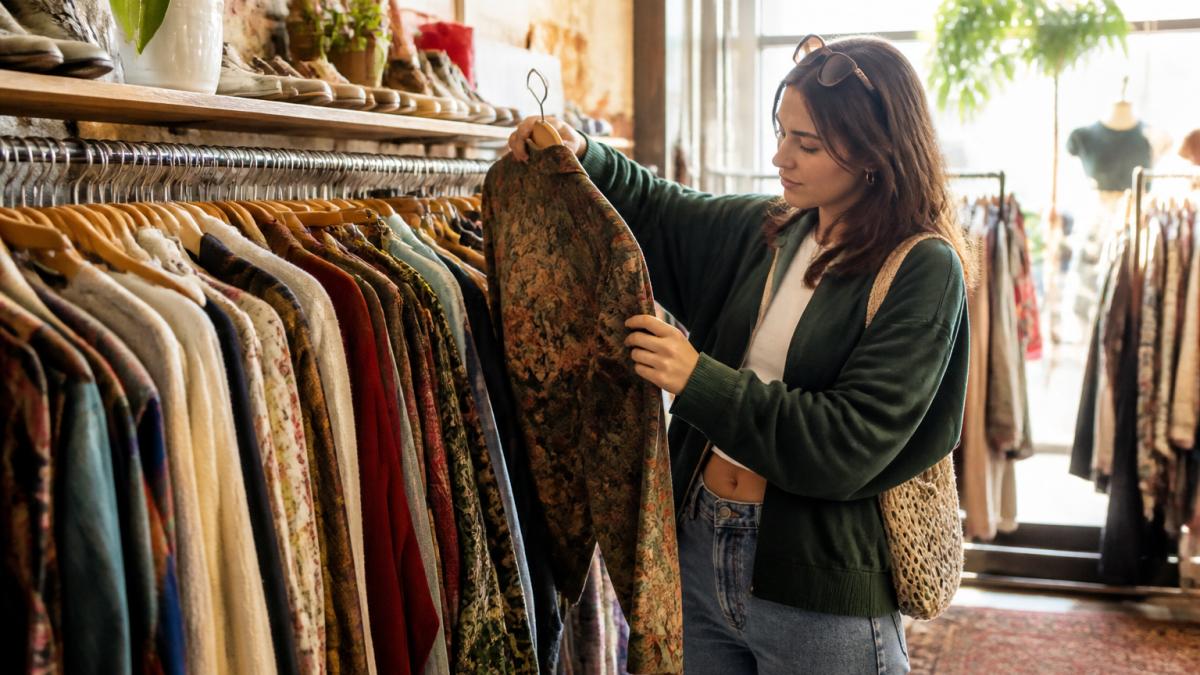
Thrifting and vintage fashion give Gen Z a way to dress well for less while keeping clothes in circulation. McKinsey's reporting on Gen Z shopping habits notes that Gen Zers say they want sustainably made items and love thrifting. That matches what we hear from customers: the hunt is half the fun.
A pre-loved designer bag is a smart entry point: it costs less than new and keeps a quality piece in use. Browse a vintage Gucci GG canvas crossbody or a Jacquemus Le Bambino top handle bag.
Clothing Upcycling Ideas That Actually Get Worn
Clothing upcycling ideas work best when they solve a real problem, like a too-long hem or a plain jacket. Upcycling means reworking existing garments instead of discarding them, simple projects get worn; complicated ones sit in a drawer.
Try these:
- Crop a too-long tee into a boxy top
- Add patches to cover small stains
- Swap plain buttons for statement ones
- Turn old jeans into a tote
Playful accessories make upcycling easy to try. A Dracula book crossbody bag in vinyl or a glow-in-the-dark Frankenstein and Bride convertible bag shows how a reworked piece can feel one of a kind. A tarot card wallet in vinyl is a low-cost way to test the look.
Skip projects that need skills you lack: start with a needle and thread, not a sewing machine.
Frequently Asked Questions
Do Gen Z consumers actually care about sustainability?
Yes, but the interest does not always reach the checkout. A 2026 study in the Journal of Business Research found that environmental concern and sustainability knowledge both raise Gen Z's intention to buy sustainable clothing. FashionUnited reported in 2024 that this stated interest often coexists with continued demand for cheap, trendy new pieces. The gap usually comes down to price and access, which is why secondhand and pre-loved shopping matter so much.
How can Gen Z make their wardrobe more sustainable on a budget?
Start with what you already own. Repair loose seams, restyle pieces you have stopped wearing, and organize a clothing swap with friends before buying anything new. When you do buy, shop secondhand first: thrifting and vintage fashion let you add current trends without paying full retail. Pre-loved designer accessories are another route, since a well-made bag bought once and carried for years replaces several cheaper replacements.
How can you tell whether a fashion brand is genuinely sustainable?
Look for specifics rather than slogans. A credible brand names its materials, publishes where garments are made, and explains what happens to unsold stock. Vague terms like eco-friendly or green mean little without detail behind them. A 2022 study of Gen Z shoppers suggested businesses should prioritize product and service quality over green marketing spend, which is a useful test: if the quality story is thin and the sustainability story is loud, be skeptical.
The hardest part of a sustainable wardrobe is not knowing what to do. It is finding quality pieces worth keeping. At Gilded Carry, we curate pre-loved designer handbags and accessories with clear product details, so you can shop with confidence and extend the life of beautiful pieces. Browse our collection and find something uniquely yours.
