


Last Updated: November 8, 2026
Quick Summary
To spot fake designer handbags, start by inspecting stitching, seams and construction, then check logos, lettering and hardware. Verify serial numbers and authenticity markings before you buy, since visual checks have limits.
- Look for even, straight stitches and neatly finished edges, especially at corners and strap attachments.
- Check that logos and lettering are precise, with correct spacing, font weight and alignment.
- Zippers, clasps and engravings should feel solid and look crisp, not hollow or smudged.
- Ask sellers for clear photos of the serial number, date code and any authenticity card.
- Skip any listing with a suspiciously low price or no close-up photos of markings.
Table of Contents
- Step 1: Inspect Stitching, Seams and Construction
- Step 2: Check Logos, Lettering and Hardware
- Step 3: Verify Serial Numbers and Authenticity Markings Before You Buy
- Frequently Asked Questions
Spotting a fake designer handbag starts with knowing what to look for, and where a quick visual check stops being enough. This Gilded Carry guide covers the three checks that matter most before you buy: stitching and construction, logos and hardware, and serial numbers and authenticity markings. Visual inspection has real limits, so use these steps as a first filter and treat any doubt as a reason to walk away.
Step 1: Inspect Stitching, Seams and Construction
Look closely at the stitching first. Real designer bags are typically sewn with even, straight, consistent stitches, and the thread color usually matches the bag. Loose threads, crooked lines or uneven spacing are common warning signs.
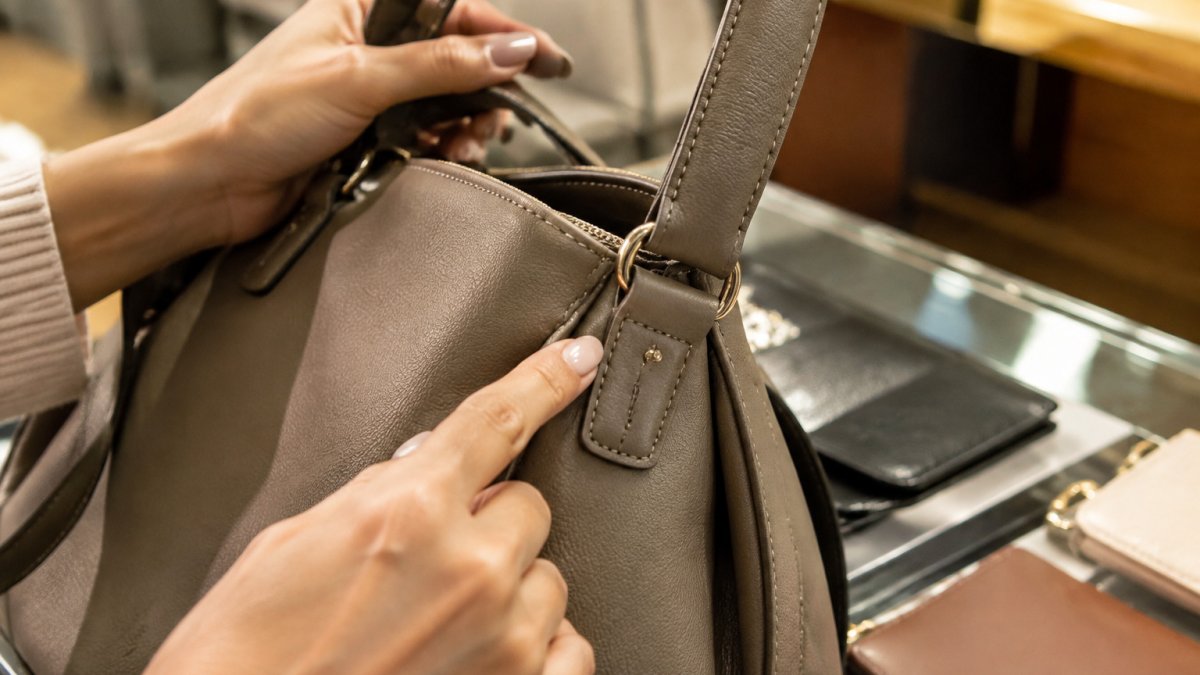
Check stitch length and spacing along every seam, corners and strap attachment points where stress shows first, and edges, which should be neatly finished rather than frayed or glued.
Check the lining and interior seams too, since counterfeiters often cut corners inside the fake designer handbags they produce.
The table below summarises the main places to check stitching and construction on a handbag.
| Area | What to check | Warning sign |
|---|---|---|
| Stitching | Even, straight, consistent stitches | Loose threads, crooked lines or uneven spacing |
| Thread color | Matches the bag | Mismatched color |
| Stress points | Corners and strap attachments | Weak or irregular stitching |
| Edges | Neatly finished | Frayed or glued |
| Lining | Interior seams neatly sewn | Corners cut inside |
Step 2: Check Logos, Lettering and Hardware
Next, examine the logos and any printed or stamped lettering. Spacing, font weight and alignment should look precise. Blurry, uneven or misspelled text is a clear red flag.
Hardware tells you a lot. Check that:
Zippers carry the brand's markings and move smoothly, clasps, feet and buckles feel solid rather than hollow or light, and engravings look crisp, not shallow or smudged.
Compare what you see with official photos from the brand's site. Small differences in shape or placement often give away a fake.
Step 3: Verify Serial Numbers and Authenticity Markings Before You Buy
Serial numbers and date codes can help, but they are not proof on their own. Counterfeiters copy them, so use markings as one piece of a larger check.
Ask the seller for clear photos of the serial number, date code and any authenticity card, confirm the marking format matches what the brand uses for that model and era, check for proof of purchase or provenance, and be cautious of listings with no markings photos at all. Read our pre-loved bag condition guide to see what to check on provenance and condition before you buy.
If a price looks far too low for the bag, or a seller refuses close-up photos, skip the purchase. For a more thorough check, consider having an independent expert review the bag before you commit, since the most advanced counterfeits can look convincing. See our vetted list of reliable designer resale sites to choose where to buy in the first place.
Frequently Asked Questions
What is the most faked luxury brand?
Louis Vuitton, Chanel and Gucci are among the most frequently counterfeited luxury handbag brands, because their monograms and recognizable shapes are easy to copy. Popularity drives demand for counterfeits, so the best-selling styles are often the most copied. Whatever the brand, the same checks apply: examine stitching, logos, hardware, materials and markings, and buy from sellers who can document where a bag came from before paying.
Can a serial number prove that a designer bag is authentic?
A serial number or date code can support authenticity, but it cannot prove it on its own. Counterfeiters copy codes and labels, and some brands have stopped using serial numbers on certain lines altogether. Compare any code against the brand's own format and the bag's other features, and treat a matching code as one data point rather than proof. For high-value purchases, an independent authenticator's report carries more weight.
Are superfakes easy to distinguish from authentic designer bags?
Not always. Superfakes can closely match a bag's visible details, and a Wall Street Journal report describes some as indistinguishable from genuine items without specialized tools. Visual checks catch many fakes but cannot guarantee authenticity. When a price seems too good or the seller cannot document provenance, consider professional authentication before you buy.
